
For many years, community theater was my jam — not just artistically, but socially. I would audition for shows far and wide; if and when I got offered a role, I might ask before accepting, “Who else have you cast?” The answer would determine who I’d be spending the next three months hanging out with, and I wanted to stack my social life with the wittiest, funniest, most engaging friends I could find.
I’d perform in four shows a year, sometimes going right from the closing performance of one show to the first rehearsal of the next just a few hours later. But when I found myself with an entire month between the closing of Babes in Arms and the beginning of You Can’t Take It With You, I lamented at the cast party, “How am I going to meet new people in the next month?”
My castmate Mary Helan said, “You could always try contra dancing!”
Having grown up listening to Garth Brooks and Shania Twain, I enthusiastically replied, “I’ve always wanted to try country dancing!”
“No — contra dancing,” Mary Helan corrected.
“Oh. What’s that?”
Contra dancing
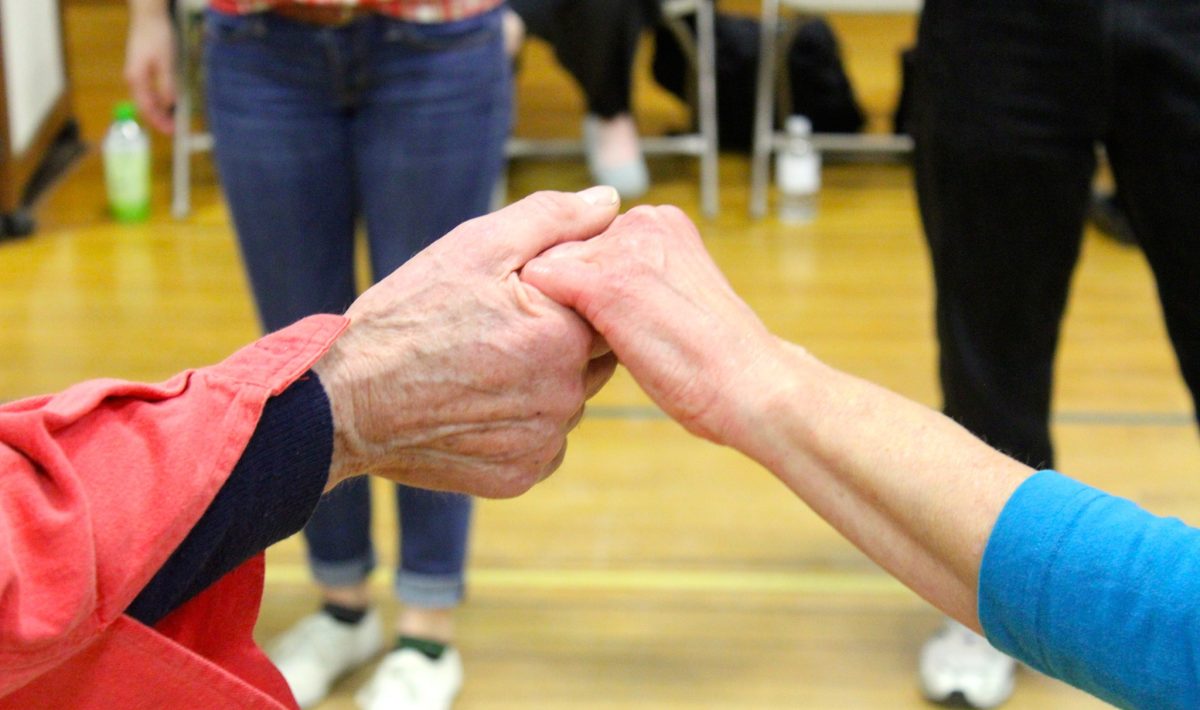
Contra is a social dance in which two partnered dancers will, over the course of a ten-minute song, dance with everyone else in the room, one pair at a time. There’s a live band with lots of fiddles who keeps the rhythm, and a caller — a person who calls out the moves so everyone always knows what to do and when. Although Mary Helan told me contra had some similarity with stage movement (the basic dance steps everyone in musical theater learns), the reality is that, in contra, you don’t need to know your left foot from your right — just your left hand from your right, since it’s all about how and where you’re holding your partner. Otherwise, contra dancing has very few “rules” — one of which is: “If you’re smiling, you’re doing it right!”
Some people envision contra dancing as a highly formalized affair out of a Jane Austen novel — but the reality couldn’t be further from the truth. Contra dancing is what you get if square dancing and swing dancing had a baby, and it looks and sounds a little something like this:
It’s kinetic, it’s diverse, it’s widespread, it’s welcoming — and it’s just what I needed in my life.
Hitting the dance floor
I’m always up for trying something new, so I asked my friend Rosemary, a fellow musical theater buff, if she’d join me. We were both living in Worcester at the time, and there were three monthly contra dances nearby — so twenty years ago today, we made our way to Northboro.
We found the community welcoming, the music lively, and the dances easy to learn. After ninety minutes of dancing, we were delighted by an intermission, replete with free snacks! It was the fuel we needed to stay the entire three hours, during which we made only one faux pas: it’s customary to ask a different person to be your partner for each dance. Rosemary and I, not knowing this or any of the other dancers, spent the entire evening dancing together, diminishing the social aspect of the pastime.
I sought out future opportunities to correct that oversight and connect with the dance community. Nonetheless, contra seemed a fun curiosity and nothing more; I’d go once every three months, only when I had nothing better to do on a Saturday night.

Then, the following spring, I went back to the dance in Northboro. The next week, I danced in nearby Berlin. The following week, I danced in Worcester. And I discovered I’d been making another faux pas by not dancing regularly; the more I danced, the more I enjoyed it.
I was hooked.
I began dancing all over Massachusetts, including farther afield in Concord, Cambridge, and Greenfield. I was a high school teacher at the time, and Susan, a fellow teacher but also the mother of one of my students, asked if she could carpool with me to a far-off dance. Together, we joined the planning committee for the Worcester dance, where I used my broad exposure to the state’s talent to book bands and callers. Friends told me I myself would make a good caller, because “you love telling people what to do!” (I’m still not sure what to make of that.)
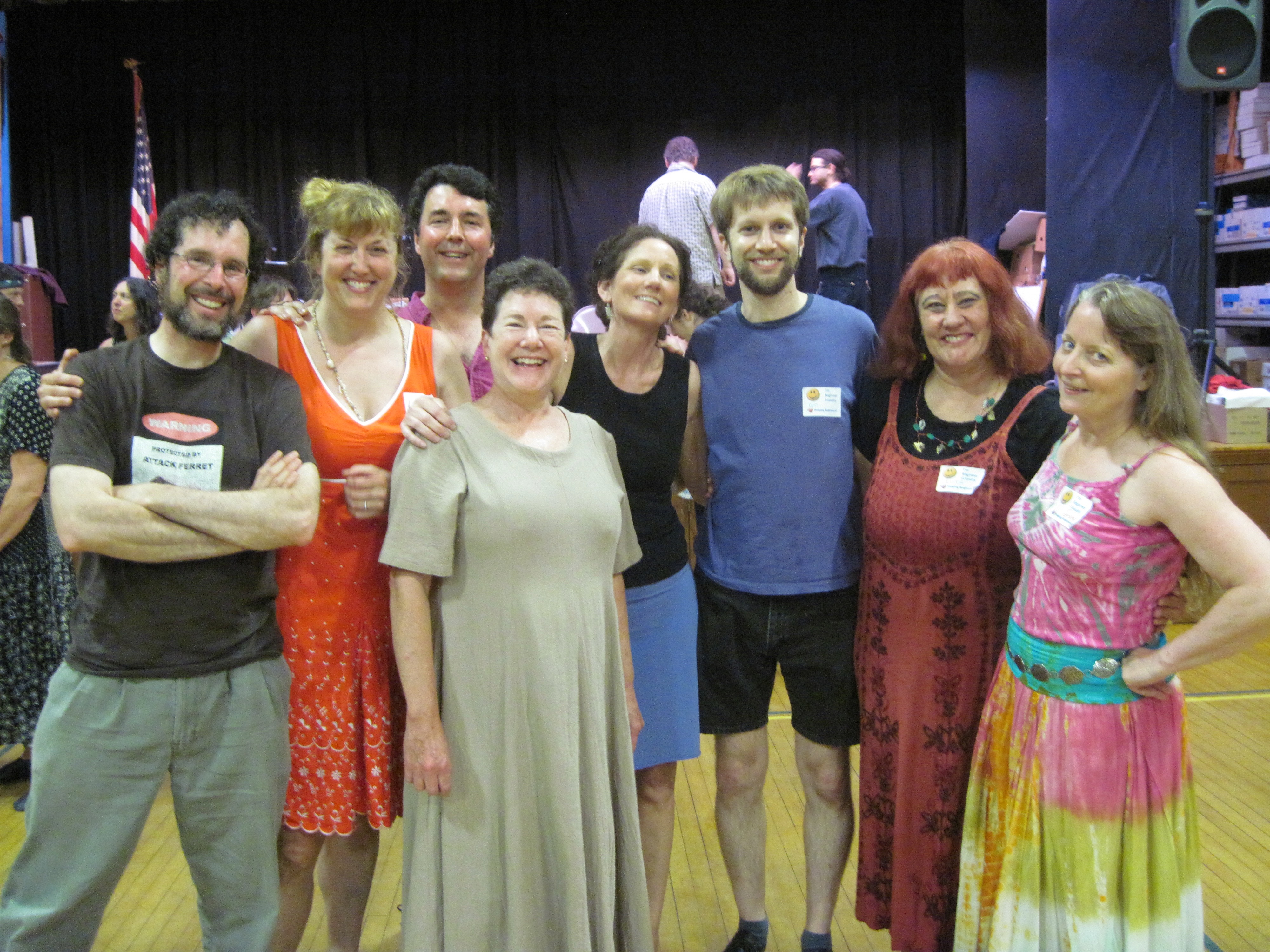
I made friends of all ages and walks of life — musicians, students, teachers, families. I made connections that last to this day. And I wasn’t the only one whose life was changed by this community: some years later, I attended Susan’s wedding — at a contra dance, to someone she’d met while dancing.
Long after I stopped doing community theater, I continued dancing. These were my people.
The dance of the digital nomad
I hit the road as a digital nomad in October 2019, and each time I arrived in a new city, there were two local activities I’d look up: the community theater and the contra dance. The former was a solo activity I’d treat myself to, but the latter was how this extrovert stayed engaged. I danced in Ithaca, New York; Glen Echo, Maryland; Carrboro, North Carolina; Pittsburgh, Pennsylvania. I was dancing my way across the country.
The pandemic put the kibosh on that.
I went years without contra dancing. But eventually, dancing came back. Boulder, Colorado, was one of the first venues where I felt safe dancing again, thanks to their requirements of both vaccines and masks. When the pandemic was downgraded to an epidemic and restrictions were lifted, I again saw brilliant smiles as dancers twirled across the floor, laughing in delight, in the arms of friends and strangers alike.
My travels have brought me to dances in Montana, Oregon, New Mexico, and Vermont. I spent an entire dance weekend nestled in a rustic lodge in the snowy mountains of Colorado, enjoying days of dancing, from sunrise to sunset. I’ve made my way back to Pittsburgh, to Ithaca, and to where it all began in Massachusetts. I’ve seen familiar faces from twenty years ago and from the other side of the country. I’ve introduced friends to contra — friends who have since gotten married and had children with people they met there. I’ve dated, played board games, gone bowling, housesat, and walked dogs with the dancers I’ve met. The contra community has become one of the few constants in the life of this nomad.
I didn’t realize, twenty years ago today, when I first set foot on that dance floor, it was the first step in a lifelong journey of friendship and joy that would follow me around the country and the world.
Have I sold you on contra? Punch your zip code into Try Contra to find where your nearest dance is! Contras are smoke-free, alcohol-free, family-friendly, LGBTQIA-friendly, and come with a free beginner lesson.

Oh my, this is such a a delightful, joyful wonderful memory inducing post! I am so thrilled that you continue to contra-dance and you introduced other people to dance and they and their children are dancing. We took our children to contradances and dance weekends in Massachusetts and Connecticut and family contradance camps in Hawaii and St Croix. Because he was comfortable with contra and square dancing, our middle son tried out a square dance venue in DC and met his future wife there his very first night❣️
The beat goes on, thank you!
The whole world should read this and come dancing!