
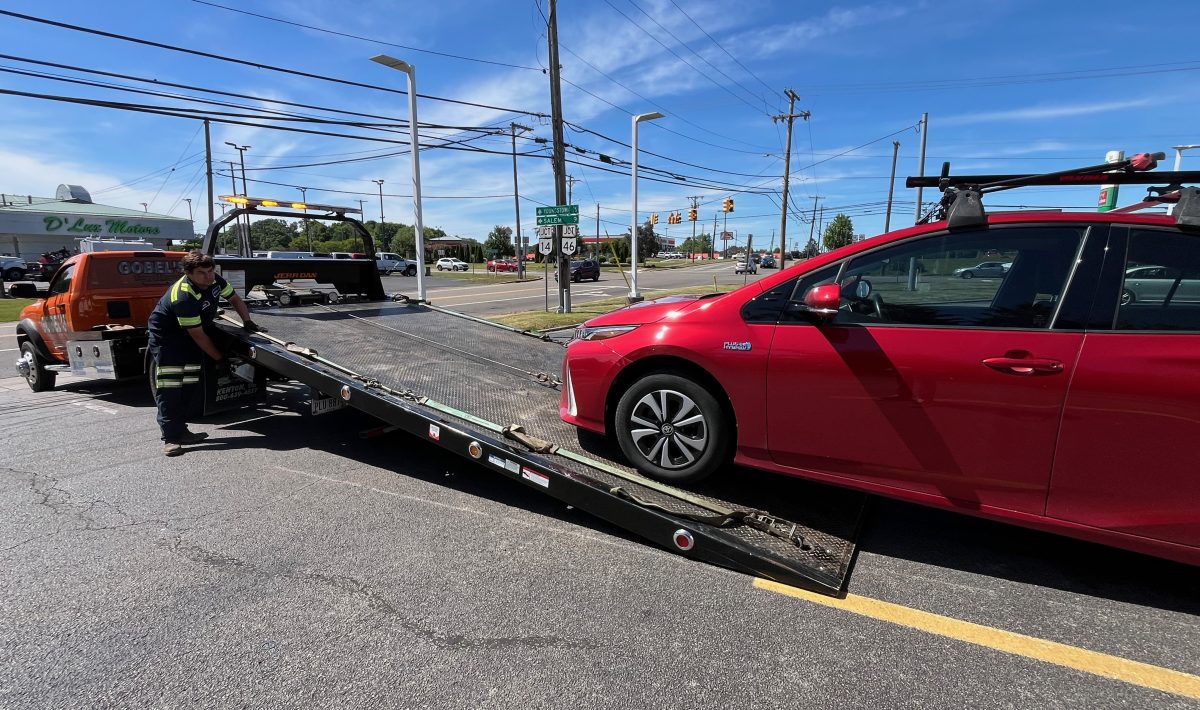
There I was, driving back to my Airbnb in Pittsburgh from a day trip to Stone Age Gamer in Ohio, when I heard a noise.
It was a beautiful day, my windows were down, and I could hear the frequency of the sound slow then stop as I rolled up to a red light. I hoped what I was hearing was some other car’s obnoxious engine, but I knew even then I was deluding myself: as the light turned green and I hit the gas, the flapping noise resumed, too nearby for me to ignore.
I pulled into the corner gas station, backed into a parking spot near their air compressor, and got out. Sure enough, my front right tire was flat, courtesy of a thoroughly embedded nail.
No problem! I’ve had plenty of flats on plenty of other cars, and I knew what to do. I opened the trunk, got out the jack, then flipped up the floor of the trunk to pull out the spare tire.
… Except there was no space under the trunk; there was no spare tire.
This being my 2017 Toyota Prius Prime‘s first flat, I’d never needed to look for the donut before; I just assumed it would be there when I needed it.
I was wrong. As a cost-saving measure, many cars no longer come with spare tires — and my Prius was the vanguard of this shift.
What I found instead was a “tubeless tire repair kit“. By plugging one end into my car’s cigarette lighter and the other into my tire valve, a liquid sealant would be pumped into the tire, sealing the puncture from inside. This temporary remedy would allow me to get back on the road long enough to get a permanent replacement for the damaged tire.
I made the connections, flipped the switch, and let it run for twenty minutes — twice as long as the manual indicated. I then ran the gas station’s air compressor, only to find my tire no better able retain inflation than before.
Pilot error, I assumed — I’d never used a tire repair kit. So I disconnected everything, reconnected it, and repeated the process for another twenty minutes. The results were the same.
That’s when I noticed that the liquid sealant had a five-year expiration date; here I was, trying to use seven-year-old sealant that had likely congealed beyond the point of usefulness.
Fortunately, I had a reliable auto club, so I gave them a ring. They don’t do roadside repairs, so they sent a tow truck that brought me to the nearest Pep Boys, which got me back on the road with new tires within the hour.
Throughout the experience, I was annoyed but not worried: I was in the parking lot of an open business at a busy street intersection; I had a full water bottle, and the gas station had food and restrooms; I had a full charge on my smartphone and strong cell reception; and I had nowhere else to be that day.
Some of those things were within my control — but other circumstances could’ve been very different: given the nature of my travels, I could’ve easily been on a desolate country road, out of gas, without cell coverage or sustenance, making a long walk in the rain and missing a flight.
Being caught without a spare tire or a working sealant kit was an act of unmitigated ignorance. I was lucky this time; I decided next time, I would rely less on luck and more on preparation. When I got home, I took stock of my vehicular emergency gear and what I lacked, and I closed the gap between the two. The result is the following inventory that I recommend everyone keep in their car.
- Auto club membership
- Tire repair kit
- Jumper cables
- Portable car battery jumper
- Rechargeable battery, radio & flashlight
- Flip phone
- Emergency car escape tool
- Dashcams
- Trickle charger
- First aid kit
Auto club membership
There are more things that can go wrong with a car than any blog post can reasonably anticipate. No matter how prepared or independent you are, membership with an auto club is essential.
AAA is the best-known such club, having been around since 1902 — but I prefer Better World Club, founded exactly a hundred years later, in 2002. I find BWC’s network of mechanics is just as comprehensive as AAA; I’ve never once been left stranded as a result of relying on BWC instead of AAA.
My preference for BWC is twofold. First, they give a membership discount to drivers of hybrid and electric cars, providing yet another incentive to move away from gas guzzlers. And second, their membership plans have options that provide roadside assistance for cars and bicycles. While, AAA is trying to catch up in this area, they’re only compensating for their own history of lobbying against bicyclists and bike lanes. I prefer to support the organization that’s always had my back: I’ve been a BWC member for 18 years, with the current price for the combo car/bike plan being $80/year.

The only mark against BWC is that their discounts at hotels and other services are not as comprehensive as AAA’s. But if it’s discounts you want, join AARP — the minimum age is only 18.
Want a 10% discount off your BWC membership? Ask me for a referral code!
Tire repair kit
When I tried to find replacement sealant for use with my Toyota-branded repair kit, no automotive store could help me; the model was proprietary.
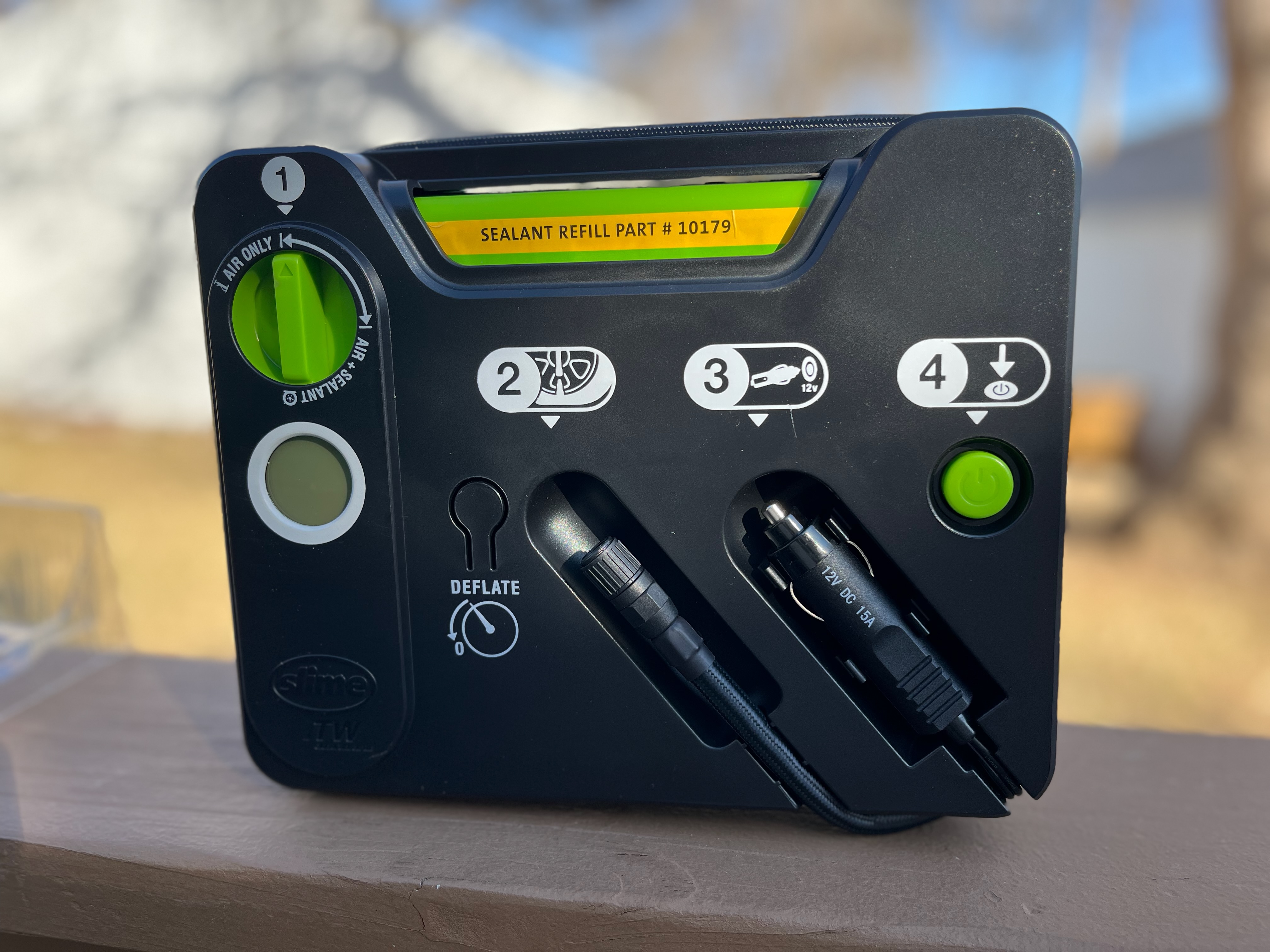
I instead recommend Slime’s tire repair kits, which can be found at any auto store. Like the one that came with my Toyota, these kits will seal punctures and then inflate the tire. A basic kit is $44 and requires four manual steps, including connecting the sealant solution to the kit and then connecting the compressor. For $80, you can instead get an all-in-one kit that both repairs and inflates at the push of a button. Both models can also be used as compressors only to inflate tires, bicycle tires, rafts, and other products.
Jumper cables
Another basic necessity, jumper cables will revive your car’s battery — assuming there’s another car nearby. My jumper cables are discontinued NASCAR “booster cables” that have served me well for decades. Today, based on online reviews, I’d recommend heavy-duty DieHard jumper cables of at least 12 feet (3.6 meters) in length, which should cost you about $40–50 at any automotive or hardware store.

I’ll leave it to your car manuals to identify which terminals to connect and in what order. After a successful jump, be sure to drive your car for at least 30 minutes to ensure a full charge.
Portable car battery jumper
The first time I took my plug-in hybrid to the drive-in movie theater, I misunderstood what mode to put the car in that would allow me to listen to the radio without having a ton of obnoxious interior lights shining at me. As a result, one hour into the movie (Black Panther: Wakanda Forever, if you must know), my car died.
I was mortified. I had jumper cables, but nobody to jump off. Do I interrupt someone else’s movie and ask for a mid-film jump? Sit quietly until the movie is over, then try to catch another driver’s attention before they leave the lot?
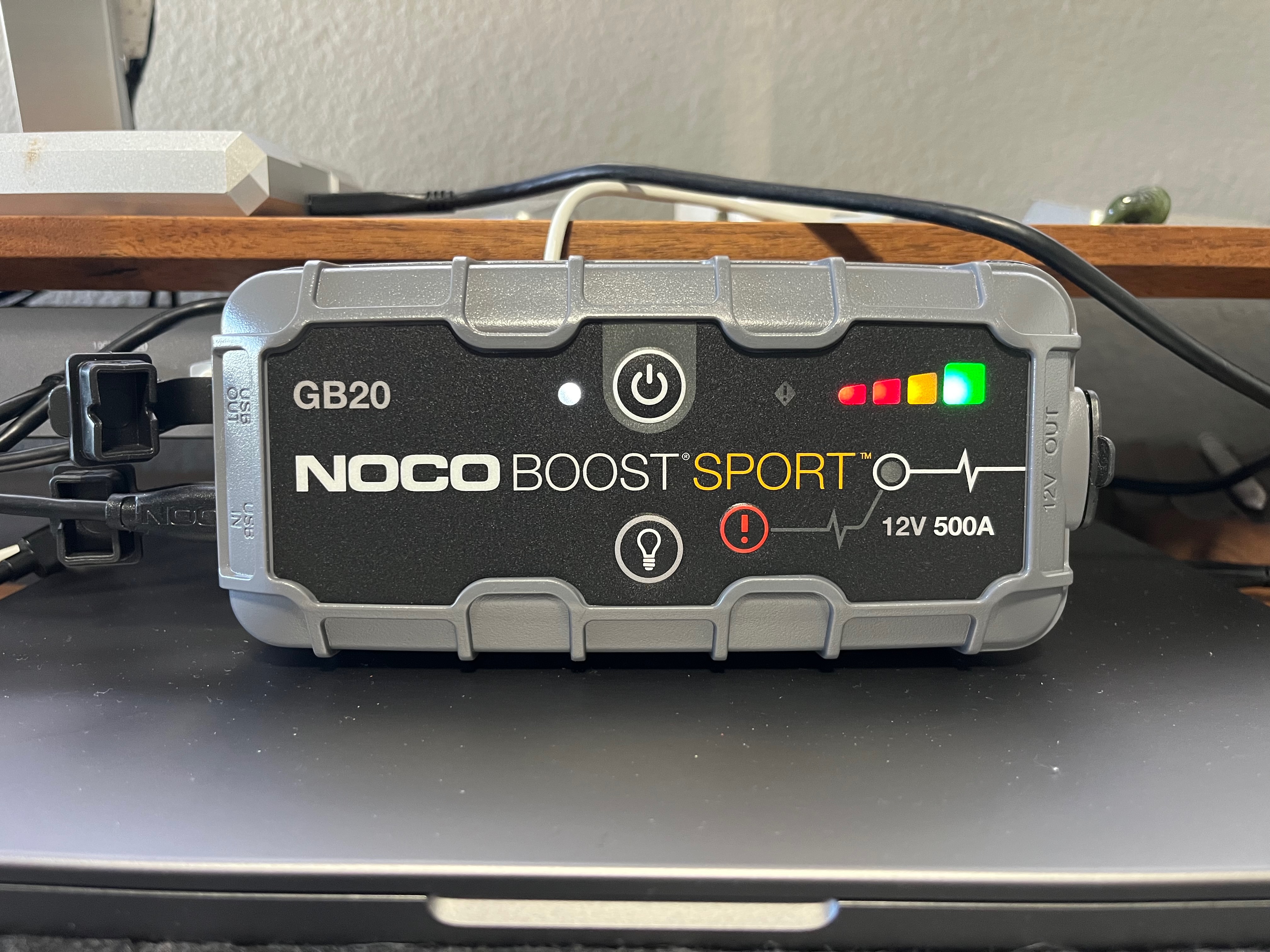
If I’d had a portable car battery jumper, I could’ve solved the situation myself — which is why I now have a NOCO Boost Jumper. This small device, about the size of two smartphones stacked together, nonetheless holds enough of a charge to get a car started with the push of a button. The jumper itself is charged using the included USB-C cable, and there’s a USB 3.0 port for charging other devices, as well as a flashlight. (The LOKITHOR-brand jumper, which is slightly larger and more expensive, includes all these features as well as an air compressor for inflating your tires.)
When I’ve asked my auto club for a jump, they’ve shown up with a portable jumper. By buying my own for just $80, I save myself the wait for a mechanic — assuming I was within range of calling one in the first place.
Rechargeable battery, radio & flashlight
Whether traveling by plane, train, or automobile, I recommend having a power bank (i.e. portable charger or spare battery) for your cell phone, so that it’s not dead upon arrival at your destination. In a pinch, the NOCO and LOKITHOR jumpers can perform this function, too.
But all these devices have one weakness in common: they themselves need to be charged, and the number of times you can use it before its charge is drained is limited. A dead power bank is as good as no power bank at all.
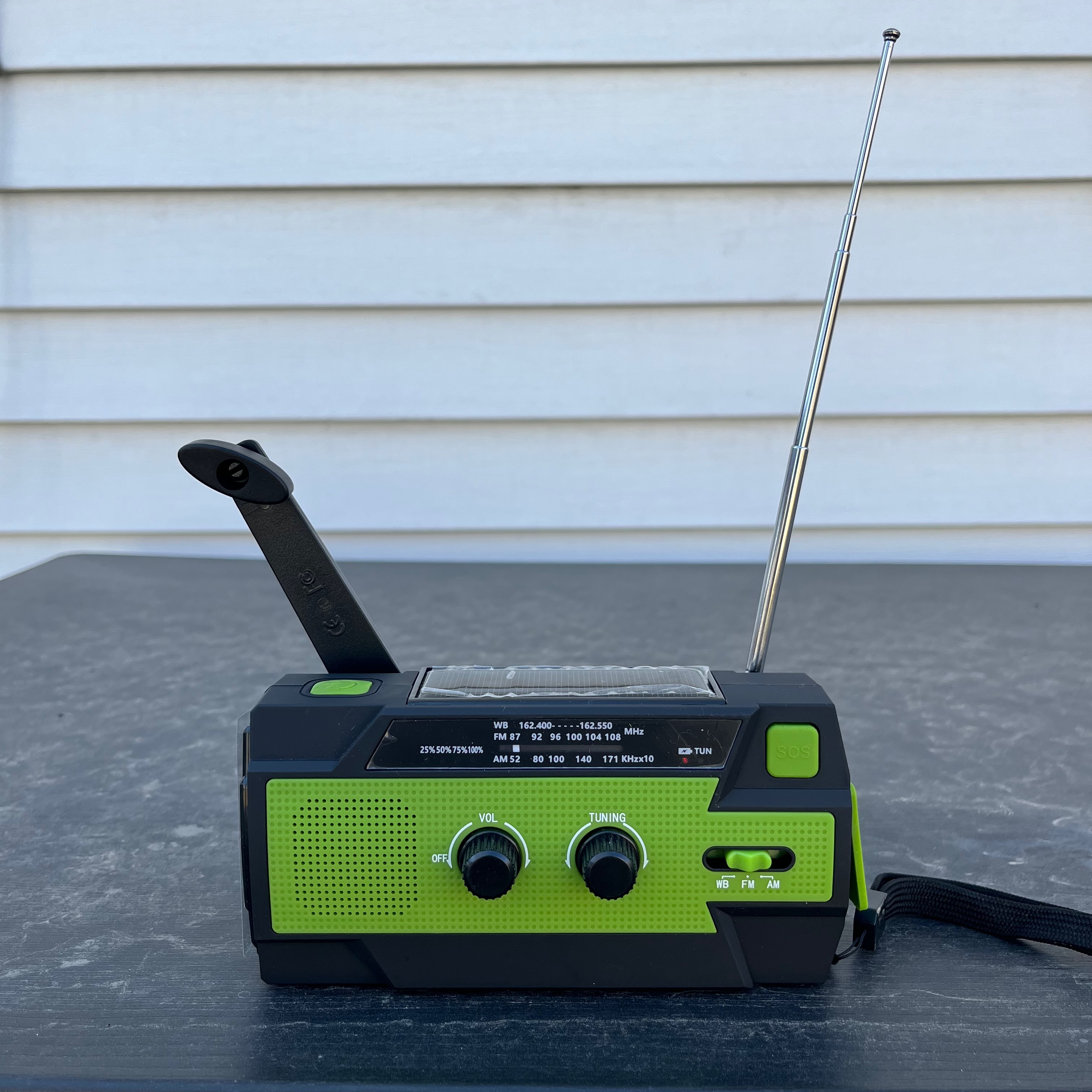
RunningSnail’s combination flashlight and radio has USB ports for charging your devices — but it has two other features that make it unique: solar panels, and a hand crank. In the absence of any other source of electricity, the RunningSnail can be recharged using entirely natural or manual means, ensuring that you’ll never be completely without power. And in the event of a natural disaster or other large-scale emergency, the radio will ensure you’re not in the dark figuratively, either. Not bad for only $28.
Flip phone
I was long a holdout against getting a smartphone; I didn’t buy my first one until 2018. But now, with resources like Google Maps and Google Translate (both of which can be used offline), even I admit how essential a travel tool they are.
But smartphones can be fragile: their batteries run out (or explode), their cases and screens break, and they get left in cabs. So I keep an emergency flip phone in my glovebox, due to one little-known but invaluable fact: all phones, even those not subscribed to a service or carrier, by law must be able to dial 911.
Lacking any other means of communication, if my flip phone is within range of a cell tower, I can still place an emergency call. The only preparation required is a periodic reminder to take it out of the glovebox and charge it, ensuring that I never let my phone die before I do.

If you don’t have an old flip phone lying around, you can get a new one from Verizon for $80, Best Buy for $30, or Tracfone for $20. Some of these models are described as “prepaid”, which means you get a certain number of minutes before the plan expires. That’s fine: once the plan expires, you’ll still be able to dial 911.
Emergency car escape tool
Who among us has not driven our car off a bridge, leaving us desperately pounding on the window and struggling to unlatch the seatbelt so we can swim to the surface?
Admittedly, what’s a common action-movie scenario is less common in real life — but accidents do happen, sometimes leaving your car in environments and orientations it was never designed to be. If your car is someplace you urgently need to not be, the resqme emergency escape tool could save your life. It’s blade will easily slice through a seatbelt, and a small spike will apply pressure to a car window, shattering it in seconds.
This is one tool I hope I never have to use — but it’s so small (about the size of my thumb) and cheap ($10 from the manufacturer or REI) that there’s little reason not to have one.
Dashcams
In the 80,000 miles I’ve driven across the United States, I’ve occasionally encountered drivers who, whether through intention or ignorance, did not have my best interests at heart. While I can’t control other people’s behavior, I can at least document it, should law enforcement or my insurance company need that evidence later.
That’s why I got BlackVue front- and rear-facing dashboard cameras. These devices are constantly recording the audio and video of everything that happens outside my car in one-minute increments, tagging every moment in which there was a sudden impact or unexpected interaction with the vehicle. As new footage is recorded, the cameras automatically delete older footage to make space, eliminating any manual maintenance or the possibility that a moment won’t be captured due to a full memory card; a 256 GB SD card can hold about a week of rolling footage. I can download the footage to my smartphone over local Wi-Fi — or, for a monthly fee, I can have the videos automatically uploaded to the cloud. The cameras are locked in tamper-proof cases, meaning a thief can’t simply turn them off. And since I had the cameras professionally installed, they’re hardwired into my car, meaning their onboard batteries won’t die or need to be replaced.
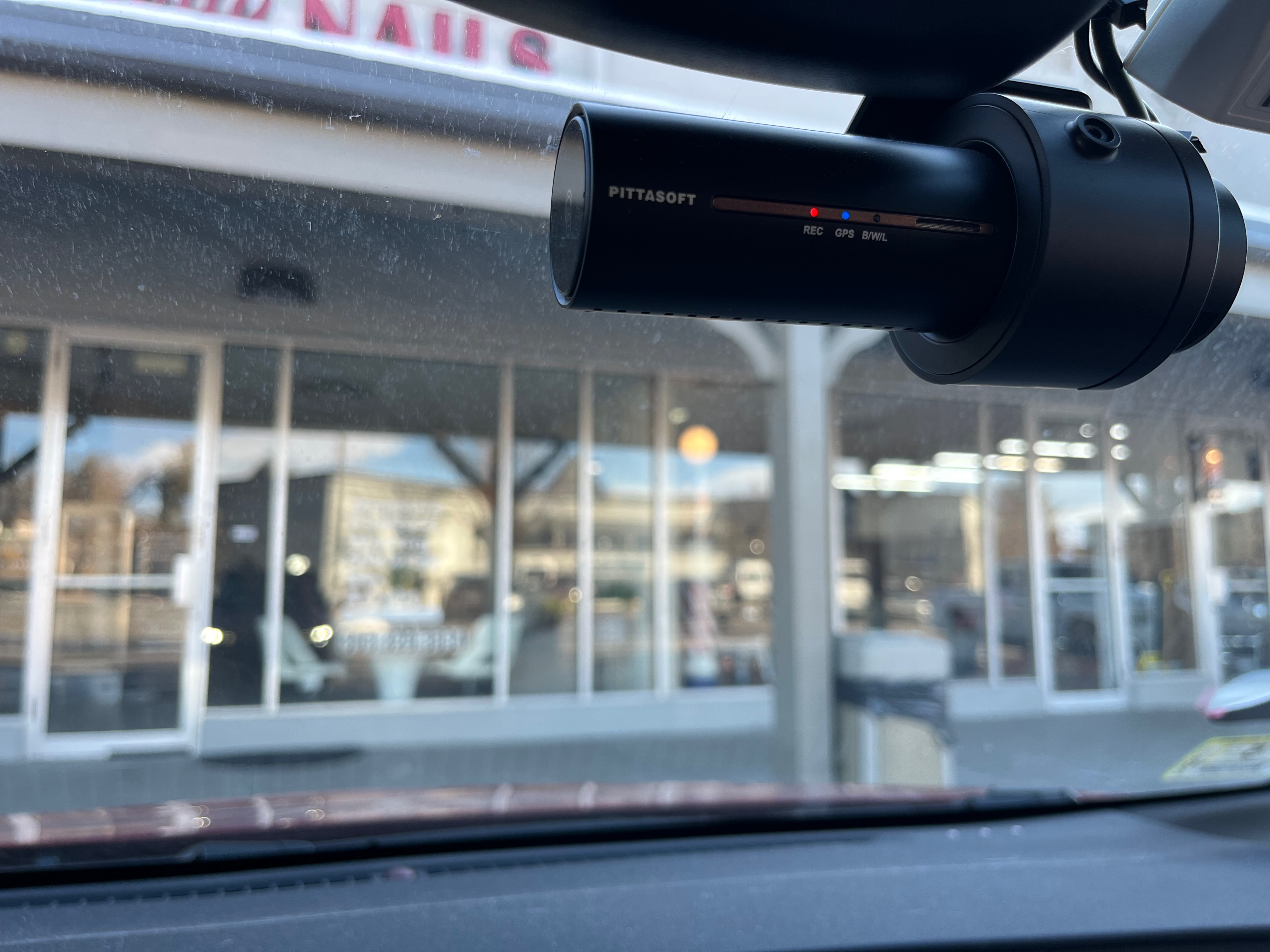
The only downside to them being hardwired and always on is that they’re constantly drawing energy from the 12V battery that powers my car’s electrical system, even when the car is parked or the ignition is off; left unattended for more than a week, and I’ll come back to a dead battery that needs a jump. Which is why I also use a…
Trickle charger
Cars that are not being actively, regularly driven may find their batteries slowly dying. That’s why it’s recommended that an idle car be started anywhere from once a week to once a month. (I’ve had military friends deployed overseas who left their car keys with someone specifically for this purpose.)
Since I travel solo, having someone maintain my car while I’m nomading internationally is not always an option. I instead use this $42 trickle charger, also known as a battery tender. By connecting one end to my battery terminals and the other to a standard 110V wall outlet, the charger keeps my car battery (and its dashcams!) juiced until I return.

First aid kit
Although this post focuses more on automotive needs than biological ones, I’d be remiss to not recommend a first aid kit. A good first aid kit consists of more than just Band-Aids, gauze, and aspirin; it can also have antibiotics, tourniquets, medical-grade superglue, blood clot powder, a water purifier, CPR masks, rubber gloves, and more. All these items need to occasionally be inspected to ensure they haven’t expired or lost their seals; simply buying an off-the-shelf kit and leaving it in your trunk, unseen and untouched, for years may leave you in the lurch when you need it most.
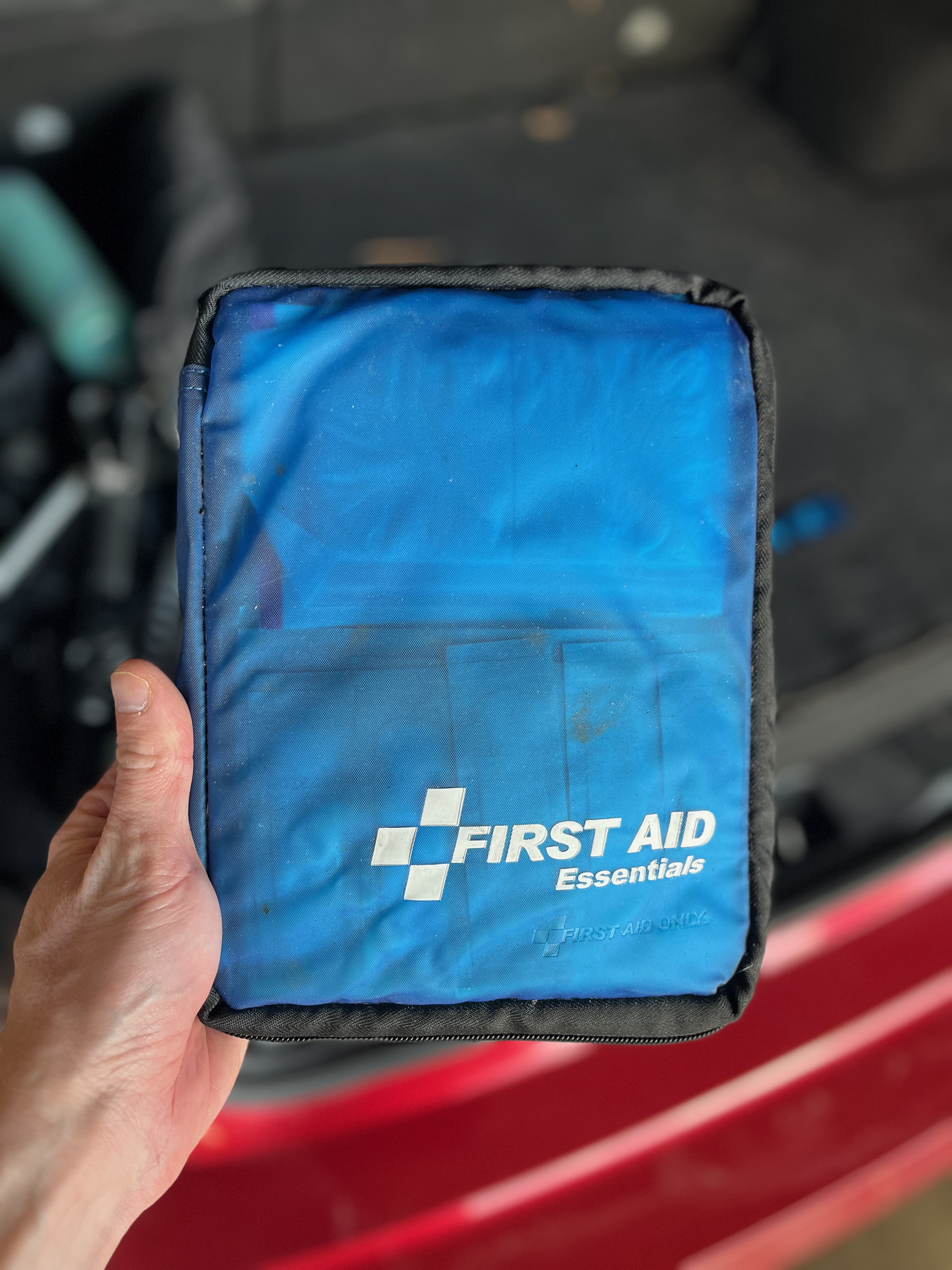
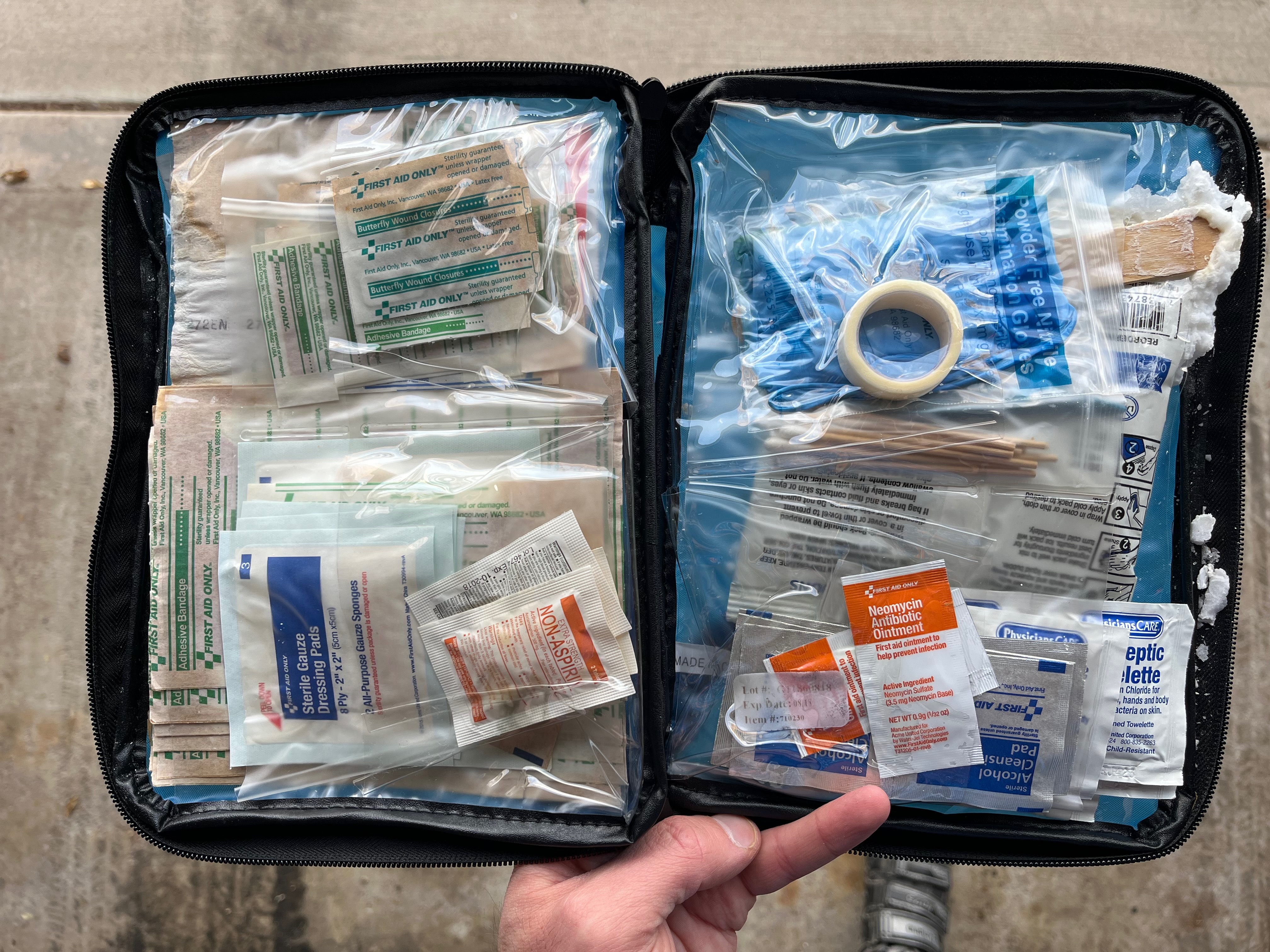
My colleague Chuck Grimmett lists what he keeps in his first aid kids; that’s a good place to start when assembling your own. If you prefer a preassembled kit, the Homestock+ ($35) and MyFAK Mini ($115) are solid options.
There’s more you could add to your emergency stash, such as blankets, ponchos, food, water, flares, fire extinguishers, and more — but the above list is a good place to start. With the exception of the dashcams and first aid kit, I got everything for $360 total, and it all fits neatly in the corners of my trunk or glovebox, taking up no room that would otherwise be filled by my nomadic inventory. And none of it requires any mechanical know-how beyond being able to follow printed instructions.
Despite this robust roster, the only items I’ve ever actually needed are the auto club membership, the jumper cables, and the trickle charger. But my grandfather used to say, “It’s better to have it and not need it than to need it and not have it.” (Whether the quote was originally Franz Kafka‘s is besides the point.) If nothing else, having the essentials gives me peace of mind as I set out on each journey, knowing that I’m equipped to handle almost anything the road throws at me.
What’s in your vehicle emergency kit? Share your recommended gear in the comments!

I didn’t realise this, I need to check my car in the morning!
One thing about an emergency car escape tool that has always bothered me is where do you store it? The obvious location, the glovebox, may not be easily accessible after an accident! (Structural damage or a locked seatbelt.)
The official recommendation is your keychain! That way, it’s either right next to the steering wheel (in older cars) or in your pocket (in newer models). It really is that small!
Nice list! I keep a dashcam, the same exact portable battery jumper (Noco Boost), and a tire inflator (which plugs into the 12V and inflates tires – saved me a couple of times from having to change the tire). I even carry all three when I’m traveling abroad. :D